If you’re searching for insights on emerging technology trends 2026, you’re likely trying to understand what’s actually shaping the future of Linux gaming—and what’s just hype. This article is built to give you exactly that clarity. We break down the technologies gaining real traction, from next-gen graphics stack improvements and AI-assisted performance tuning to advancements in Proton compatibility and open-source driver innovation.
Rather than recycling headlines, we analyze upstream development activity, kernel updates, GPU driver roadmaps, and hands-on performance benchmarks to identify what’s practical, what’s experimental, and what’s ready for daily use.
By the end, you’ll know which trends are poised to impact your gaming setup, how they could improve performance and stability, and what steps you can take now to stay ahead as 2026’s most important Linux gaming innovations unfold.
Beyond the Hype: The Technology That Will Actually Define 2026
This isn’t another parade of buzzwords. Instead, we’re examining emerging technology trends 2026 that deliver gains in speed, access, and usability. First, AI copilots are moving from chatbots to embedded system tools, automating workflows inside IDEs, game engines, and operating systems. That shift means faster debugging, smarter asset generation, and fewer repetitive tasks. Meanwhile, spatial computing hardware is shrinking, with headsets and passthrough reducing friction for use. In gaming, Vulkan updates and Proton compatibility layers close performance gaps on Linux. Open standards win because they cut costs and extend lifespans.
The AI Revolution Gets Personal: Efficient, Localized Intelligence
For years, artificial intelligence meant massive cloud servers humming away in distant data centers (basically warehouse-sized brains with electric bills to match). However, that model is shifting. Instead of sending every request to the cloud, AI is moving to the “edge”—a term that simply means processing data directly on your device, whether that’s your phone, PC, or even your car. Smaller, highly optimized models now run locally, cutting latency, saving bandwidth, and dramatically reducing energy use (and yes, your battery will thank you).
Meanwhile, open-source AI frameworks are gaining serious traction. Open-source means the underlying code is publicly available, allowing developers to modify and improve it. Critics argue this could create fragmentation or security risks. Fair point. But transparency also builds trust and speeds innovation. When thousands of developers can inspect and refine a model, customization flourishes—and privacy improves because your data doesn’t have to leave your device.
So what does this look like in practice? In 2026, AI fades into the background. It optimizes game performance on the fly, balances system resources, extends battery life, and delivers real-time language translation without an internet connection. In fact, many emerging technology trends 2026 point toward AI becoming as invisible as Wi-Fi—essential, but rarely noticed.
And honestly, that’s the goal. The smartest tech shouldn’t feel like sci-fi. It should just work.
The New Gaming Frontier: Seamless Cross-Platform Play and Specialized Hardware
The old console wars framed gaming as Windows vs. Linux, PC vs. console, desktop vs. handheld. But that binary thinking is fading fast. Compatibility layers like Proton—a translation layer that lets Windows games run on Linux—are maturing to the point where your operating system matters less than your game library. In other words, players care about access, not allegiance.
Some skeptics argue Windows will always dominate because of native support and anti-cheat integration. Fair point. Native compatibility often means fewer headaches. But Proton’s steady improvements (Valve reports thousands of titles now “Playable” or “Verified” on Steam Deck) challenge that assumption. The real shift? A unified library you can access anywhere—desktop, couch, or commute.
Handheld PCs: Power in Your Backpack
Compare a 2020 handheld to a 2026 model:
- Then: Low settings, short battery life, thermal throttling.
- Now: High-end PC titles running natively, improved efficiency per watt, better cooling architectures.
Devices inspired by the Steam Deck prove that portability no longer means compromise. And as emerging technology trends 2026 push chipmakers toward AI-assisted power scaling, handheld PCs become even smarter about balancing performance and battery life. (Yes, your RPG grind session just got more portable.)
Open-Source Performance Boosters
Proprietary upscalers like DLSS and FSR sparked the performance race. Now, open alternatives are gaining traction. Upscaling—rendering at lower resolution and intelligently enhancing output—lets players trade visual sharpness for smoother frame rates. Open solutions mean broader hardware compatibility and fewer ecosystem lock-ins.
Critics say proprietary tech still wins in raw polish. Sometimes true. But open tools give users control. And control scales. For deeper industry parallels, see how ai startups are disrupting traditional software markets.
The future isn’t about platforms fighting—it’s about platforms dissolving.
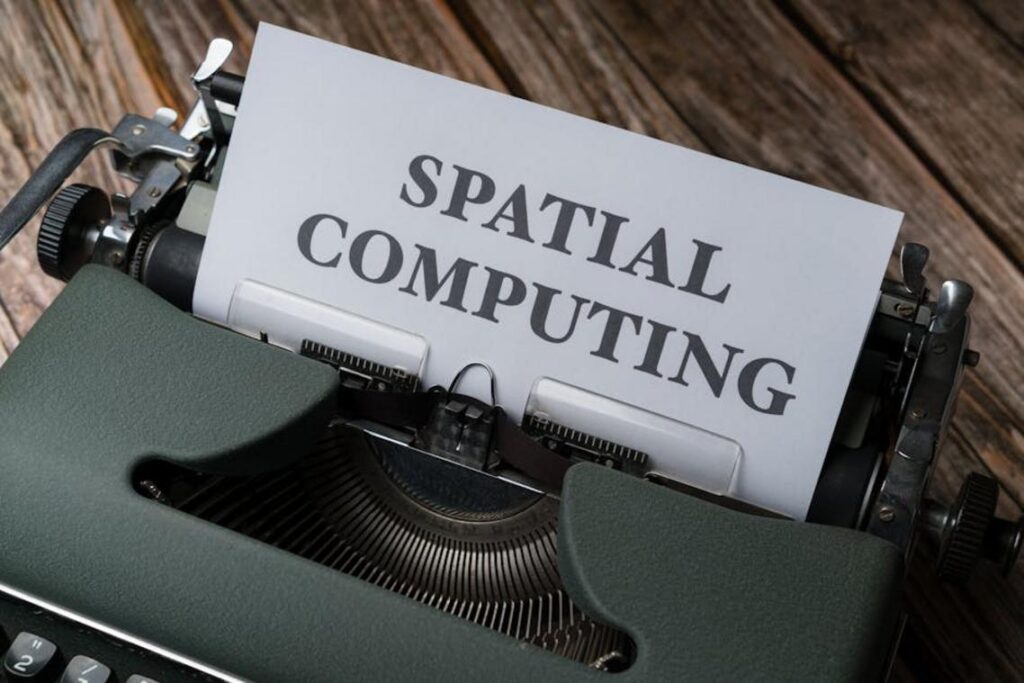
Spatial Computing Finds Its Footing: From Niche Gadget to Practical Tool

I still remember the first time I tried AR navigation in a crowded city. Instead of staring down at my phone, arrows hovered over the sidewalk in front of me. I didn’t bump into anyone (a minor miracle). That was the moment spatial computing—technology that blends digital content with the physical world—stopped feeling like a gimmick.
AR You Can Actually Use
Augmented Reality (AR), which overlays digital elements onto your real environment, is finally practical. We’re seeing in-world walking directions, remote technicians guiding repairs with live visual overlays, and collaborative 3D design sessions where teammates manipulate the same virtual model. Some critics argue AR is still a novelty—remember the filter craze? Fair point. But enterprise training data shows AR-based instruction can improve task accuracy and retention compared to traditional manuals (PwC, 2020). That’s not just flashy—that’s functional.
Interoperability Is Key
Open standards like OpenXR (a cross-platform API that lets apps run on multiple headsets) reduce ecosystem lock-in. Without it, developers build once and rebuild endlessly (no one wants that).
The Lightweight Revolution
Bulky headsets scared off everyday users. Now, glasses-style devices focus on specific tasks—navigation, maintenance, design. Pro tip: specialized hardware often drives adoption faster than “do-it-all” gear. As emerging technology trends 2026 unfold, practicality—not spectacle—will win.
Decentralization and the Push for Digital Ownership
Decentralization isn’t just about crypto speculation. It’s about control. Instead of handing your data to a handful of tech giants, decentralized protocols let you manage your identity, social presence, and files directly. That means fewer surprise bans, clearer privacy boundaries, and real portability. (Yes, finally.)
For gamers, the upside is huge. Imagine actually owning your in-game sword or skin—not renting it. Blockchain-based assets can be transferable between platforms, potentially even across games. Your rare mount could move with you like Geralt carrying gear between quests. The benefit? Time and money invested stay yours.
This shift also fuels the open web’s comeback. Interoperable systems reduce reliance on walled gardens, aligning with emerging technology trends 2026 and giving users flexibility, security, and long-term digital value.
Your Roadmap for Navigating the Next Wave of Tech
We’ve explored the most practical emerging technology trends 2026 is shaping: localized AI, unified gaming ecosystems, and usable spatial computing. The real benefit? More control, better performance, and fewer walled gardens.
The shift toward open standards and interoperability means you get:
- Freedom to choose hardware and software that fit your needs
- Better performance through optimized, cross-platform layers
- Longer device lifespans thanks to efficient, local processing
- Reduced reliance on closed ecosystems (goodbye forced upgrades)
Some argue proprietary systems are “simpler.” Maybe. But open ecosystems consistently drive innovation (see: Linux, Android). Watch open-source AI and compatibility layers—they signal where power shifts back to users.
Level Up Your Linux Gaming Experience in 2026
You came here to understand how to get the best possible performance, compatibility, and stability from your Linux gaming setup—and now you have the roadmap to do it.
From optimizing Proton layers to fine-tuning system resources and staying aligned with emerging technology trends 2026, you’re no longer guessing your way through crashes, frame drops, or unsupported titles. You know what tools to use, what settings to tweak, and how to future-proof your rig.
The truth is, most Linux gamers struggle with inconsistent performance and confusing compatibility issues. But with the right optimizations in place, Linux can rival—or outperform—traditional gaming platforms.
Now it’s time to act.
Start by applying the performance tweaks outlined above, test your Proton configurations, and benchmark your system after each change. Stay updated with the latest open-source drivers and kernel improvements so you’re never left behind.
If you’re serious about smooth gameplay, higher FPS, and flawless compatibility, keep following our in-depth Linux gaming breakdowns. We’re trusted by thousands of open-source gamers for practical, tested optimization strategies that actually work.
Don’t settle for “almost playable.” Optimize your system today and turn your Linux machine into the high-performance gaming setup it’s meant to be.
 Founder & Chief Visionary Officer
Ask Eloria Neythanna how they got into tech industry buzz and you'll probably get a longer answer than you expected. The short version: Eloria started doing it, got genuinely hooked, and at some point realized they had accumulated enough hard-won knowledge that it would be a waste not to share it. So they started writing.
What makes Eloria worth reading is that they skips the obvious stuff. Nobody needs another surface-level take on Tech Industry Buzz, Proton Compatibility Insights, Linux Setup Optimization Tips. What readers actually want is the nuance — the part that only becomes clear after you've made a few mistakes and figured out why. That's the territory Eloria operates in. The writing is direct, occasionally blunt, and always built around what's actually true rather than what sounds good in an article. They has little patience for filler, which means they's pieces tend to be denser with real information than the average post on the same subject.
Eloria doesn't write to impress anyone. They writes because they has things to say that they genuinely thinks people should hear. That motivation — basic as it sounds — produces something noticeably different from content written for clicks or word count. Readers pick up on it. The comments on Eloria's work tend to reflect that.
Founder & Chief Visionary Officer
Ask Eloria Neythanna how they got into tech industry buzz and you'll probably get a longer answer than you expected. The short version: Eloria started doing it, got genuinely hooked, and at some point realized they had accumulated enough hard-won knowledge that it would be a waste not to share it. So they started writing.
What makes Eloria worth reading is that they skips the obvious stuff. Nobody needs another surface-level take on Tech Industry Buzz, Proton Compatibility Insights, Linux Setup Optimization Tips. What readers actually want is the nuance — the part that only becomes clear after you've made a few mistakes and figured out why. That's the territory Eloria operates in. The writing is direct, occasionally blunt, and always built around what's actually true rather than what sounds good in an article. They has little patience for filler, which means they's pieces tend to be denser with real information than the average post on the same subject.
Eloria doesn't write to impress anyone. They writes because they has things to say that they genuinely thinks people should hear. That motivation — basic as it sounds — produces something noticeably different from content written for clicks or word count. Readers pick up on it. The comments on Eloria's work tend to reflect that.