Understanding open-source game licenses is essential if you want to play, modify, or distribute Linux games without running into legal or compatibility issues. Many gamers and developers dive into open-source titles for the freedom and flexibility they offer—but licensing terms can quietly shape what you’re actually allowed to do. This article breaks down the most common licenses used in open-source gaming, explains how they affect mods, redistribution, and commercial use, and clarifies what they mean for Proton compatibility and performance tweaks on Linux systems. Our guidance is grounded in hands-on testing across Linux distributions, real-world optimization experience, and deep analysis of how licensing intersects with game engines and community development. By the end, you’ll know exactly how different licenses impact your gaming setup—and how to make informed decisions that protect both your system and your projects.
Decoding the Code: Why Software Licenses Matter for Your Gaming Project
First, picture the glow of your monitor at 2 a.m., fans humming, coffee gone cold. You finally hit compile—and then realize your license choice could change everything. Software licenses are the legal rules that dictate how others can use, modify, or sell your work. Some argue licenses are boring fine print (like the terms you scroll past on Steam). However, choosing the wrong one can legally require you to reveal proprietary code or block commercial sales. Understanding open-source game licenses protects your creative freedom and revenue options. Choose carefully; prosper.
The Core Concepts: Permissive vs. Copyleft
What Is a License?
A license isn’t ownership. It’s a legal framework that defines how others can use, modify, and distribute your work. Think of it as house rules for your code: you still own it, but you decide what guests can do inside.
The Fundamental Divide
Open-source licenses generally fall into two camps:
| Type | Core Idea | Best For |
|——|———–|———-|
| Permissive | Minimal restrictions, broad reuse | Maximum adoption |
| Copyleft | Derivatives must stay open | Long-term openness |
Permissive Licenses
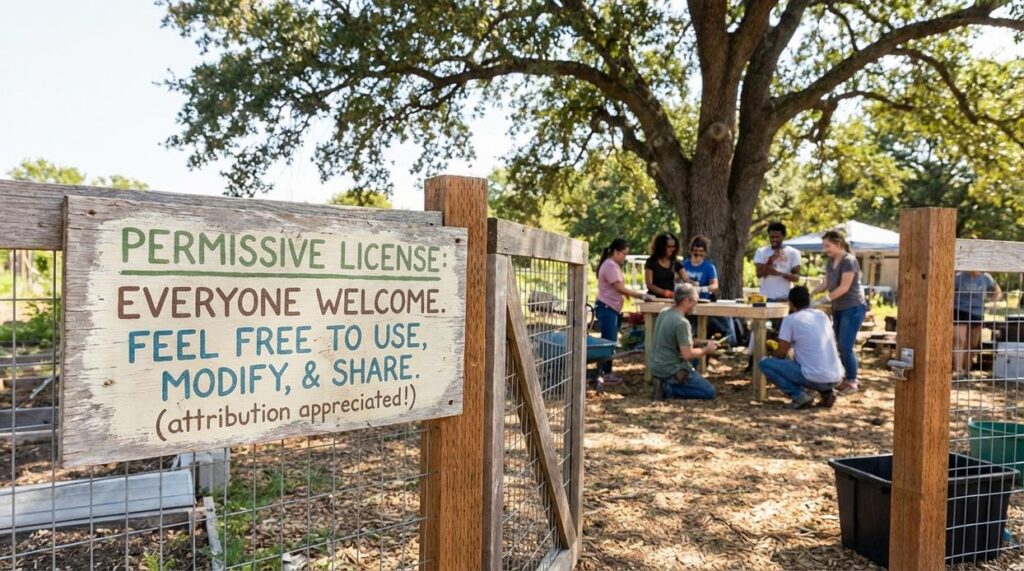
Permissive licenses allow reuse in proprietary, closed-source commercial projects, usually requiring only attribution. If you want your project widely adopted—even inside commercial games—choose this route.
Copyleft Licenses
Copyleft licenses require derivative works to use the same or compatible license, keeping improvements public. If protecting community freedom matters most, this is your best bet.
When evaluating open-source game licenses, decide first: do you value reach or reciprocity? Pick accordingly (clarity beats regret later).
Permissive Licenses (MIT, Apache 2.0): Maximum Freedom for Developers
When developers talk about freedom, they usually mean permissive licenses—agreements that let you use, modify, and distribute software with almost no strings attached. Among open-source game licenses, two stand out for their simplicity and power.
The MIT License: Simple and Wide Open
The MIT License is the clean white canvas of licensing. Short, readable, and refreshingly direct, it basically says: do almost anything you want with this code—just keep the original copyright and license notice attached.
That’s it.
You can remix it, sell it, bundle it inside a commercial engine, or ship it in a blockbuster title humming with surround sound and ray-traced lighting. The only obligation is attribution. This minimal friction is why engines like Godot use it. Developers can integrate the code and feel the smooth click of compatibility without legal static in the background. (Think of it as the jeans-and-T-shirt of licenses—works everywhere.)
Some critics argue MIT is too permissive—that corporations can take without giving back. True. But that openness is precisely why adoption spreads so fast.
The Apache 2.0 License: Freedom with Patent Protection
Apache 2.0 feels sturdier, like a well-machined metal chassis. It offers similar freedoms to MIT but adds an express patent grant—meaning contributors promise not to sue users over patent claims tied to the code. In a world where patent trolls lurk, that extra shield matters.
For large collaborative projects, this clarity reduces risk and keeps innovation flowing.
Maximum reach, minimal restriction—that’s the appeal. If you want your tools powering everything from indie pixel-art adventures to cinematic AAA worlds, permissive licenses make sure nothing stands in the way.
Copyleft Licenses (GPL Family): The “Share and Share Alike” Philosophy
The GNU General Public License (GPL) is the poster child of copyleft (a licensing approach that requires derivative works to remain under the same license). Its defining trait is often called “viral”—not in a horror-movie way, but in a legal one. If you incorporate GPL-licensed code into your project, your entire project must also be released under the GPL. In other words, you can’t bolt GPL code onto your game and then ship it as closed-source. The whole thing has to be open.
For commercial gaming studios, this is where the record scratches. If your business model depends on proprietary engines or secret sauce mechanics, the GPL can feel like inviting the Rebel Alliance into the Death Star’s control room. Some argue this makes GPL impractical for serious game development. That’s fair—if your goal is exclusivity. However, if your goal is long-term community freedom and collaboration, GPL ensures no one can take the code private later (a safeguard many open-source advocates value; see Free Software Foundation).
When should you use it? GPL is ideal for community-driven projects where preserving openness matters more than monetization strategy—think passion projects, educational games, or collaborative indie experiments.
The GNU Lesser General Public License (LGPL) offers a middle ground. It allows developers to link to an LGPL library without forcing their entire application to adopt the same license, provided users can swap out the library. This makes it especially useful for engines, middleware, and tools adjacent to games—common components in open-source game licenses ecosystems.
If you’re building your stack thoughtfully, start with building a gaming setup using open source software.
Beyond Code: Licensing Your Game’s Art, Music, and Assets
First, understand a critical distinction: software licenses are built for code, not for creative assets like sprites, 3D models, textures, or soundtracks. Using the wrong license can accidentally restrict players—or worse, block your own commercial release.
So what should you use instead? Creative Commons (CC) licenses are the standard for art and audio. Here’s how the main types work.
CC0 (Public Domain Dedication) places the work in the public domain. You can use, modify, and sell it without attribution. It’s the closest thing to “no strings attached.”
CC BY (Attribution) lets you use the asset commercially, but you must credit the creator.
CC BY-SA (ShareAlike) requires that any derivative work be released under the same license—great for collaboration, tricky for proprietary games.
Finally, CC BY-NC (NonCommercial) forbids commercial use entirely, making it incompatible with most revenue-generating projects.
Check terms before shipping.
Choosing a license is more than a legal checkbox; it’s a strategic move License confusion can quietly derail a brilliant game especially when you blur the line between permissive licenses minimal restrictions copyleft licenses share-alike requirements and asset-specific licenses art or audio limits So first define your commercial goals and community vision If you want maximum adoption start permissive If you value reciprocity choose copyleft Next audit every imported asset Finally document your decision before writing more code Clear choices around open-source game licenses protect collaboration and future revenue Pro tip: align contributors with a simple license guide early publicly.
Level Up Your Linux Gaming Experience
You came here to figure out how to get the most out of Linux gaming—without fighting performance issues, compatibility headaches, or confusing setup steps. Now you have the tools to fine-tune your system, optimize Proton compatibility, and better understand how open-source game licenses impact what you can install, modify, and enjoy.
Linux gaming shouldn’t feel like a workaround. The real frustration is wasting hours troubleshooting when you just want smooth gameplay and reliable performance. With the right tweaks and knowledge, your system can run faster, cleaner, and more efficiently than you thought possible.
Now it’s time to act. Apply these performance optimizations, review your Proton settings, and double-check your configuration for hidden bottlenecks. If you want step-by-step Linux gaming breakdowns trusted by thousands of performance-focused players, explore our in-depth guides and optimization tutorials today.
Stop settling for stutter and guesswork. Upgrade your setup, refine your configuration, and start gaming on Linux the way it was meant to run.